SpinDog Licence and Trust UK: UKGC Status, GAMSTOP and Player Protection
 Available in GB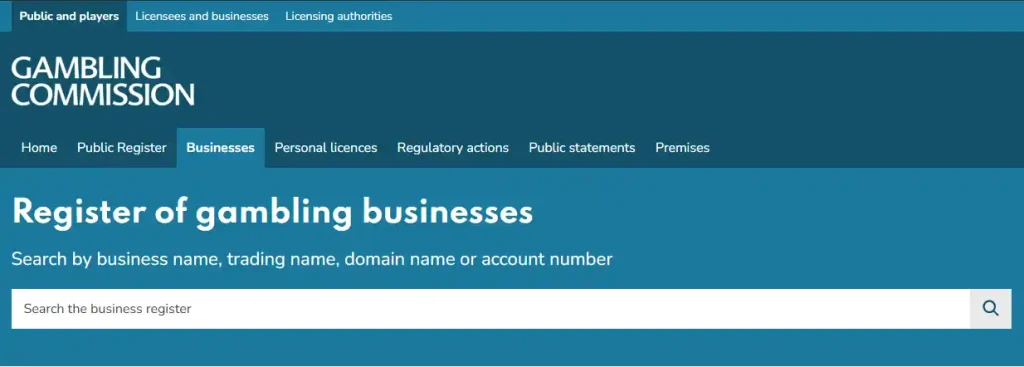
Regulatory status check
No UK Gambling Commission licence for SpinDog or spindogcasino.com was verified in the public register check dated 11 September 2026. The Commission’s register itself was updated on 11 September 2026, and UKGC guidance states that an operator providing remote gambling to consumers in Great Britain needs a Commission licence, regardless of where the business is based. That result should be read precisely: it means this review could not verify SpinDog as a GB-licensed operator. It does not, by itself, prove that SpinDog is criminal, unavailable, or covered by a particular foreign licence. It also means UK readers should not assume that GB-licensee protections such as GAMSTOP participation or UKGC-specific technical rules apply to SpinDog.
Table of Contents
- SpinDog UKGC licence status: the dated result
- What the UKGC rule is for Great Britain
- Why GAMSTOP coverage cannot be assumed for SpinDog
- GB slot stake caps are protections for licensed operators
- The 10x bonus wagering cap is another GB-licensee benchmark
- Financial-limit prompts and the 30 September 2026 changes
- Financial Risk Assessments are being introduced in stages
- Great Britain is not the same regulatory scope as Northern Ireland
- What a no-hit in the UKGC register does and does not tell you
- Trust signals beyond a licence badge
- Responsible gambling resources for UK readers
- SpinDog licence and safety questions
- The UK regulatory trade-off behind using SpinDog
- SpinDog Games: Slots, Table Games, Jackpots and Providers
SpinDog UKGC licence status: the dated result
The central fact for this page is the public-register result. On 11 September 2026, the register check did not verify SpinDog or spindogcasino.com as holding a UK Gambling Commission licence. The UKGC register page says it can be searched by business name, trading name, domain name or account number and shows the register data as updated on the same date.
This is narrower than a generic statement that a casino is “legal” or “illegal”. A register no-hit tells us that a specific UKGC authorisation was not verified under the searched brand/domain. It does not resolve a disputed foreign licence jurisdiction, operator identity or every question about accessibility. This guide therefore leaves those separate claims unresolved.
| Question | What can be said | What should not be inferred |
|---|---|---|
| UKGC licence? | No SpinDog/spindogcasino.com UKGC licence was verified in the 11 September 2026 register check. | Do not claim UKGC authorisation without a register hit. |
| Operational access? | Current evidence supports operational access for British users. | Access is not the same as local licensing. |
| Foreign licence? | The checked sources conflict. | Do not publish Curaçao, Costa Rica, Malta, Anjouan or another jurisdiction as settled fact. |
| Operator identity? | The checked sources do not resolve it safely. | Do not present a disputed company name as the confirmed operator. |
What the UKGC rule is for Great Britain
The Gambling Commission’s current remote-sector guidance is explicit: a business needs a UKGC licence if it provides remote gambling facilities to consumers in Great Britain. The Commission also explains that this applies even when the business is based abroad. In this context, Great Britain means England, Scotland and Wales.
The remote casino operating licence covers online casino games offered through websites, mobile services and other remote channels. That is why a local licence check is highly relevant to a British player’s risk assessment. It is not a cosmetic badge. UKGC licensees are subject to the Commission’s Licence Conditions and Codes of Practice and Remote Gambling and Software Technical Standards.
The underlying statutory framework is the Gambling Act 2005. For this page, the key practical distinction is not whether an offshore site can technically be reached, but whether the operator has the local authorisation that triggers the Great Britain regulatory framework.
Why GAMSTOP coverage cannot be assumed for SpinDog
The Gambling Commission describes GAMSTOP as the national online self-exclusion scheme that restricts access to gambling websites and apps run by businesses licensed in Great Britain. GAMSTOP’s operator portal likewise states that it is for remote gambling companies licensed by the Commission.
Because a SpinDog UKGC licence was not verified, this review cannot state that a GAMSTOP exclusion will definitely block a SpinDog account. That is a material distinction for anyone who relies on multi-operator self-exclusion as part of their gambling controls.
GB slot stake caps are protections for licensed operators
For remote casino licensees in Great Britain, the UKGC’s online slot stake rules cap stakes per game cycle at £2 for adults aged 18 to 24 and £5 for those aged 25 and over. The Commission says the £5 limit took effect on 9 April 2025 and the £2 limit on 21 May 2025.
Those rules are attached to remote casino operating licences. Because this review did not verify a UKGC licence for SpinDog, it would be misleading to describe the UKGC stake caps as a SpinDog player protection. They are useful as a benchmark for what a GB-licensed remote casino must follow, not evidence of what SpinDog itself has implemented.
The 10x bonus wagering cap is another GB-licensee benchmark
From 19 January 2026, UKGC licensees must not apply wagering requirements above 10 times the bonus funds in promotional offers. The rule appears in Social Responsibility Code 5.1.1. This is one of the clearest examples of why licence status matters when comparing bonus terms.
SpinDog’s bonus mechanics are covered separately in the SpinDog bonus. This licence page does not use the UKGC cap to declare SpinDog compliant or non-compliant. Instead, it uses the rule to show what protections and constraints attach to a GB licence, and why a user should not automatically assume those protections apply when no licence hit is verified.
Financial-limit prompts and the 30 September 2026 changes
The UKGC’s current technical standards require licensed remote operators to provide customers with financial-limit tools, and the Commission’s revised RTS wording says customers must be prompted to set a limit during registration or at first deposit. A further set of deposit-limit changes is scheduled to take effect on 30 September 2026, after being moved from the earlier June date.
From that date, the UKGC says licensees must offer gross deposit limits and use the term “deposit limit” specifically for that type of limit. The system must also prevent further deposits once a deposit limit is reached until the defined period restarts or the customer increases it subject to the applicable cooling-off rule.
These are again GB-licensee requirements, not features this review attributes to SpinDog. At the time of writing, 30 September 2026 is still in the future, so this page treats the second-phase requirements as scheduled rather than already effective.
Financial Risk Assessments are being introduced in stages
In July 2026 the Gambling Commission announced a staged introduction of Financial Risk Assessments for high-spending customers in financial difficulty. The first stage is designed around unusually high net-deposit levels, with lower thresholds planned at later stages. The Commission had not yet fixed every implementation date when the current update was published.
This context matters because it illustrates the broader difference between a casino merely offering account checks and a regulator imposing structured consumer-protection requirements on licensees. The SpinDog registration and KYC covers the operator’s own verified identity-check wording. It should not be confused with UKGC financial-risk rules that apply to licensed businesses.
Great Britain is not the same regulatory scope as Northern Ireland
The UK is not one single gambling-regulation zone for this purpose. UKGC remote licensing rules discussed above apply to consumers in Great Britain, meaning England, Scotland and Wales. Northern Ireland has a separate gambling-law framework based on the Betting, Gaming, Lotteries and Amusements (Northern Ireland) Order 1985, amended in 2022.
The Northern Ireland Department for Communities explains that courts and district councils handle much of the licensing and certification under that framework, while the PSNI has an enforcement role. The Department has also described wider reform of online gambling as a later phase of policy work. That is why this guide avoids saying the UK Gambling Commission regulates all gambling activity across the whole United Kingdom in exactly the same way.
What a no-hit in the UKGC register does and does not tell you
- It does tell you
- This review could not verify a Great Britain remote gambling licence for SpinDog under the checked brand/domain on 11 September 2026.
- It does tell you
- You should not assume UKGC-specific protections, complaints structures or GAMSTOP coverage are attached to the SpinDog account.
- It does not tell you
- That a specific foreign licence exists. The checked sources conflict on foreign-jurisdiction claims.
- It does not tell you
- That every British user is technically blocked from the site. Operational access is a separate availability dimension.
- It does not tell you
- That the absence of a verified licence hit can by itself settle every criminal-law or private-law question for every user or operator.
Trust signals beyond a licence badge
Trustpilot provided a secondary reputation signal at the time checked: the SpinDog profile showed a 2.9/5 TrustScore with about 313 reviews. That is user-generated reputation data, not a regulatory finding, and the score or review count can change. It is useful mainly because it shows mixed customer sentiment rather than establishing safety, solvency or licence status.
Licensing is the strongest structured signal on this page because it determines which regulator’s rules and redress systems apply. Other trust signals should still be reviewed, but they need to be kept in their proper category. A functioning support desk, a large game catalogue or completed withdrawals can be useful operational signals, yet none substitutes for a regulator register entry.
The same is true of payments. SpinDog publishes deposit and withdrawal terms, including identity checks and payout limits, but the existence of those terms does not establish UKGC supervision. Use the SpinDog payment methods and SpinDog withdrawals for mechanics, then return to the licence result when assessing which protections sit behind those mechanics.
Responsible gambling resources for UK readers
If gambling is becoming difficult to control, the priority should be reducing access rather than finding another operator. The UK Gambling Commission points users to the National Gambling Helpline and lists GAMSTOP as the online multi-operator self-exclusion scheme for businesses licensed in Great Britain. The Commission’s current help page gives 0808 8020 133 for England and Scotland and 0808 2819 265 for Wales, with support available 24 hours a day, 7 days a week.
If you already use GAMSTOP, the unverified UKGC status of SpinDog is especially important. Do not assume a non-verified operator will be covered by the same exclusion network. Consider device-level blocking, bank gambling blocks and direct self-exclusion as additional layers where appropriate.
SpinDog licence and safety questions
Is SpinDog licensed by the UK Gambling Commission?
No SpinDog or spindogcasino.com UKGC licence was verified in the public-register check dated 11 September 2026.
Does that mean SpinDog is illegal in the UK?
This review does not make that blanket conclusion. The verified point is narrower: operators serving consumers in Great Britain remotely require a UKGC licence, and no SpinDog licence hit was verified.
Is SpinDog covered by GAMSTOP?
Coverage cannot be assumed. GAMSTOP applies to online gambling businesses licensed in Great Britain, while a SpinDog UKGC licence was not verified.
Does SpinDog have a foreign gambling licence?
The checked sources conflict on the foreign licence jurisdiction and operator identity, so this site does not publish a specific foreign licence as settled fact.
The UK regulatory trade-off behind using SpinDog
For a reader in England, Scotland or Wales, the decision is not only about games, bonuses or payment methods. The UKGC register check did not verify SpinDog as a licensed Great Britain operator, while the Commission’s rules make clear that remote businesses serving GB consumers require a licence. That gap changes what can safely be assumed about GAMSTOP, slot stake caps, bonus-wagering limits, financial-limit standards and regulator-backed consumer protection. It does not justify inventing a foreign licence or reducing the entire question to a one-word legal label. The practical trade-off is clearer: SpinDog may be operationally accessible, but the SpinDog UK review cannot attach the safeguards of a verified GB licence to that access.